Details:
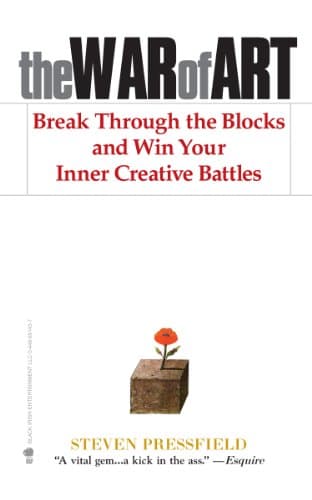
Steven Pressfield (War of Art) says the surest compass is dread: “The more scared you are of a calling, the surer you can be that you must do it.”
Ryan Holiday (The Obstacle Is the Way) lifts a Stoic maxim from Marcus Aurelius: the impediment becomes the path. The task you shy from is precisely the training ground for virtue, progress and luck.
Why the dread-object is the best target:
1 -
Lens: Neuro-biology
What happens: Perceived threat spikes noradrenaline; re-labelling that arousal as challenge (rather than danger) shifts the pre-frontal cortex into approach-mode, improving focus and memory.
Take-away: Use “I’m excited” self-talk just before you start.
2 -
Lens: Behavioural economics
What happens: “Loss-aversion” keeps us circling safe tasks. Deliberately running toward the fear flips the internal cost-benefit: the only way to escape discomfort is through action.
Take-away: Treat avoidance as an accumulating tax; action as the single payment.
3 -
Lens: Identity diversification
What happens: Holiday reframes obstacles as curriculum; you become a student of difficulty rather than a hostage to outcomes, spreading self-worth across learning, not just winning.
Take-away: Log each obstacle as a lesson earned - the journal entry becomes a receipt for progress, reinforcing growth over ego.
Practical 4-step mashup:
1 - List today’s Resistance triggers. Write every task that gives you butterflies.
2 - Rank dread (1–10) ↔ Impact (1–10). Circle items scoring ≥ 7 on both.
3 - Rename the top item “THE WAY” in your planner; block a 90-minute “pro shift” (Pressfield’s term) first thing tomorrow.
4 - Run a post-mortem, not a score-card. After the session jot: Obstacle? What did it teach? - folding Holiday’s lens back into the next round.
Bottom line:
If a project makes your stomach drop, it’s both Pressfield’s compass and Holiday’s obstacle-path in one package. Name it, schedule it, and study what it teaches; the dread you felt is the tuition, not the toll.