Details:
Feeling wired? Or feeling anxious?
Wander over to a window. Let your eyes drift all the way out to the roofline, treetops, or the furthest cloud you can spot. Now raise a finger and, as you breathe in, draw that outline in slow motion. Exhale on the way back down. Three to five passes take about a minute, but the pay-off is bigger than it looks.
Here’s the behind-the-scenes magic:
Panoramic gaze – Looking from near-field pixels to a distant horizon relaxes the ciliary muscles that tighten around your lenses all day. That signals your parasympathetic system to dial cortisol down a notch.
Eye-hand coupling – Matching your finger’s path to what you see pulls the parietal and premotor networks online, dragging attention out of mental chatter and into real-time sensorimotor flow.
Soft fascination – Even a scrap of sky or skyline counts as a low-effort landscape. Studies on “soft fascination” show it steadies heart-rate variability and eases digital-eye strain.
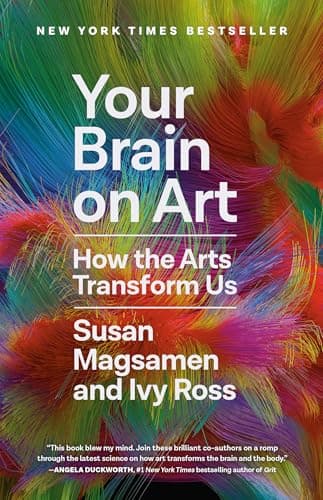
The best moment? Mid-morning slump or late-afternoon fog—any time you need a neural clutch between tasks. The idea comes from Your Brain on Art by Susan Magsamen and Ivy Ross. It isn’t fine art, but your brain doesn’t care; that tiny doodle in the air delivers a micro-dose of creativity, a shot of calm, and a clearer head for whatever’s next.